IMG_2675-225x300IMG_2680-225x300

When a commercial truck driver fails a drug or alcohol test or refuses to take one, federal law does not simply allow them to get back behind the wheel the next day. Instead, the law requires a specific process to protect the public, and at the heart of this process is the Substance Abuse Professional.

Under 49 CFR Part 40, a Substance Abuse Professional is a specially credentialed professional who evaluates drivers who have violated the Department of Transportation’s drug and alcohol testing rules. Substance Abuse Professionals are not just counselors; they are federally recognized gatekeepers with the power to determine whether a driver can return to safety-sensitive duties such as operating a tractor-trailer. To qualify, an Substance Abuse Professional must be a licensed physician, psychologist, social worker, employee assistance professional, or certified drug and alcohol counselor, and must undergo DOT-approved training and testing.

Once a driver tests positive or refuses testing, the employer must immediately remove that driver from duty. At that point, the Substance Abuse Professional steps in. The Substance Abuse Professional conducts a face-to-face evaluation, determines whether the driver requires education, treatment, or both, and develops a rehabilitation plan. Only after the Substance Abuse Professional certifies that the driver has complied with these recommendations can the driver take a return-to-duty test. Even then, the process is not over. Federal rules require the Substance Abuse Professional to design a follow-up testing schedule that the employer must enforce, often lasting years and involving numerous unannounced tests.

IMG_6073-225x300IMG_6092-225x300
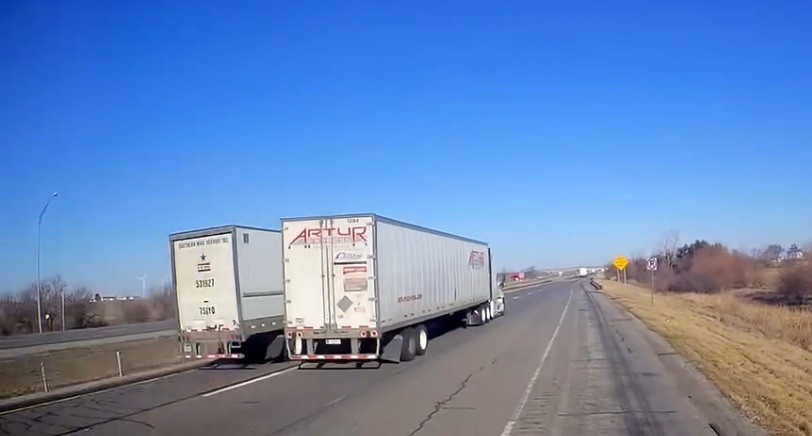
The truck accident lawyers of Zneimer & Zneimer P.C. recognize the devastating personal injuries that can result from trucking accidents.  To make the roads safer, truck drivers  and trucking companies are responsible for complying with the rules of the road and federal regulations.  Every truck driver who holds a commercial driver’s license (CDL) and operates in interstate commerce is subject to the Department of Transportation’s strict testing rules. These rules are not suggestions; they are federal safety mandates designed to keep impaired drivers off the road.

Drivers must undergo drug and alcohol testing in specific circumstances: before employment begins, after certain accidents, randomly during employment, when reasonable suspicion exists, and before returning to duty after a violation. Only urine and oral fluid specimens tested in HHS-certified laboratories are allowed for drug testing. Quick “instant tests,” hair testing, or unapproved methods are not authorized under federal law.

If a driver tests positive or refuses to test, federal law requires immediate removal from safety-sensitive duties such as operating a commercial vehicle. A driver cannot return to work until completing an evaluation with a Substance Abuse Professional, following prescribed treatment or education, and passing a return-to-duty test. Even after returning, the driver will face a rigorous schedule of follow-up testing for years

IMG_E1121-300x291IMG_1084-225x300
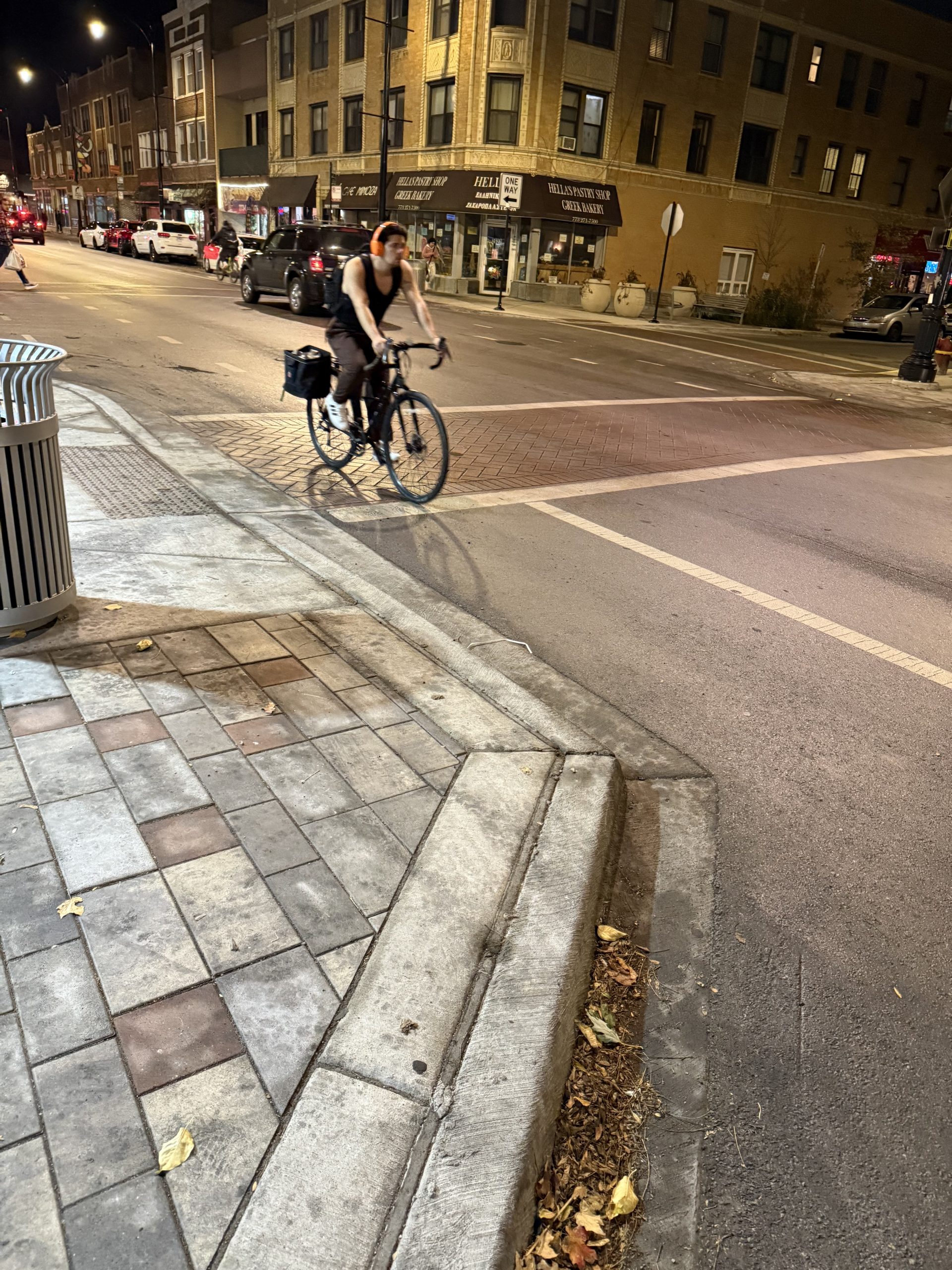
Bike riding has taken off in Chicago in the last few years. More bike riding has predictably lead to more bike accidents. The bike accident lawyers of Zneimer & Zneimer P.C. have witnessed the rise of bike accidents first hand, with more injury cases calling than ever. One of the most common types of bike crashes that Zneimer & Zneimer P.C. handle are “dooring” accidents.  In Chicago the majority of bike lanes run right next to parked cars, and that proximity creates a serious and underappreciated danger: the risk of being “doored.” In a dooring accident, a motorist or passenger forgets to look for bikes and opens a vehicle door into the path of an oncoming bicyclist, causing a collision, most often throwing the biker off their bike that often results in an injury.

In this post, we’ll explain why dooring is a uniquely dangerous hazard in Chicago, what the law says about it, relevant crash data, and how injured cyclists can protect their rights.

Why “Dooring” Is Especially Risky in Chicago

IMG_0009-225x300IMG_1090-225x300
Shared e-scooters from companies like Lime and Lyft have become a familiar sight on Chicago streets. They offer a quick, convenient way to get around, but they also raise serious safety concerns, especially when children are involved. Parents, schools, and communities across the city have noticed clusters of kids riding scooters near high schools when the dismissal bell rings.  The personal injury lawyers of Zneimer & Zneimer P.C. have litigated cases involving injuries teenagers and we know how dangerous e-scooters can be.

Age Restrictions for Lime and Lyft E-Scooters

  • Lime requires riders to be 18 years or older with a valid driver’s license.

IMG_0036-225x300IMG_0065-225x300
Ridesharing has transformed how we get around Chicago. Apps like Uber and Lyft make it simple to request a ride with just a few taps. But when accidents happen, rideshare cases are more complicated than a typical car crash. The biggest question is usually who pays? Understanding insurance coverage and what insurance coverage is in effect at the time of the crash is important in these cases.  The personal injury lawyers Zneimer & Zneimer P.C. have handled many such cases and know that if you have been involved in a crash, it is important to speak with an attorney before speaking with the insurance company.

When You Are a Passenger in an Uber or Lyft

If you are riding in an Uber or Lyft and the driver causes an accident, both Uber and Lyft provide up to $1 million in liability coverage and uninsured/underinsured motorist coverage. One million dollars of coverage is more coverage than a vast majority of vehicles have on the road.

IMG_0567-288x300IMG_0566-1-225x300
Heading to a lively street fair in Chicago can be a fun outing for humans and dogs alike. But when the space is packed, safety of other people and safety of the dog should be your top priority.

Potential Risks

  • Overstimulation and anxiety. Loud music, crowds, street performers, and unfamiliar smells can overwhelm dogs, increasing stress and unpredictability.

IMG_0007-225x300IMG_E6398-300x292
Las bicicletas eléctricas están en auge en popularidad, pero su presencia en los carriles para bicicletas de Chicago plantea serias preocupaciones de seguridad. Los abogados de lesiones en bicicleta de Zneimer & Zneimer P.C. han notado de primera mano el aumento de víctimas de lesiones relacionadas con bicicletas que llaman a nuestra oficina.

Las bicicletas eléctricas pueden alcanzar velocidades de hasta 28 mph, significativamente más rápidas que la mayoría de las bicicletas de pedales. Los estudios muestran:

  •      Los ciclistas de bicicletas eléctricas sufren lesiones más graves, incluidas fracturas, traumatismos internos y conmociones cerebrales.

IMG_0036-225x300IMG_0065-1-225x300
El 10 de agosto de 2025, un hombre de Gage Park fue atropellado por un sedán gris mientras intentaba cruzar la calle en el cruce peatonal de South Kedzie Avenue a las 3:20 a. m. El Chicago Suntimes informó que el sedán gris se pasó un semáforo en rojo, golpeó a Jermaime Martin, quien estaba en el cruce, y luego huyó. El Chicago Suntimes informó que el 3 de agosto de 2025, un hombre de 31 años fue atropellado y muerto por un conductor que se dio a la fuga en Greater Grand Crossing. El 22 de julio de 2025, el Chicago Suntimes informó que un peatón fue atropellado por una GMC SUV color burdeos en la cuadra 500 de North Pulaski Road. Parece que ocurre un accidente grave de atropello con fuga en Chicago cada pocos días. Los abogados de lesiones personales de Zneimer & Zneimer,  P.C. actualmente están manejando múltiples casos de atropellos a peatones y ciclistas en los que los clientes tienen seguro. Desafortunadamente, las víctimas de un atropello que no tienen seguro de auto no tienen suerte, ya que no hay de quién cobrar.

Chicago tiene una crisis de seguridad peatonal, y los atropellos con fuga están en el centro de ella. Dependiendo de qué conjunto de datos oficiales se consulte —y de cómo se reconcilien las muertes posteriores—, 2024 registró al menos 28 muertes de peatones en calles de la ciudad (más cinco ciclistas), y posiblemente hasta 38 muertes de peatones una vez que se agregaron los registros posteriores del CDOT. (chi.streetsblog.org)

¿La policía se toma en serio los atropellos con fuga?

IMG_0009-225x300IMG_5111-225x300
Electric scooters, once touted as a fun and eco-friendly transportation alternative, have rapidly become a fixture on Chicago’s streets. Since the city first introduced rental e-scooters in 2019, usage has surged — with more than 3.7 million trips taken between mid-2022 and late 2023, compared to just 1.3 million in the program’s early years. Unfortunately, this growth has brought with it a troubling rise in injuries and legal concerns.

A Surge in Scooter-Related Injuries

Chicago hospitals are reporting a steady increase in scooter-related traumas. In a Chicago Suntimes article dated October 9, 2024, Dr. David Trotter of Advocate Illinois Masonic, a Level 1 trauma center, has reported seeing more patients suffering everything from cuts and broken bones to severe traumatic brain injuries caused by scooter crashes. Because many scooters reach speeds of 15 to 20 miles per hour, collisions can be as devastating as car crashes.  The scooter injury lawyers of Zneimer & Zneimer, P.C. have also seen sharp rise in scooter injury cases just in the last two years.

IMG_0065-225x300IMG_5586-225x300
On August 10, 2025, a Gage Park man was hit by an gray sedan as he attempted to cross the street in the crosswalk on South Kedzie Avenue at 3:20 am.  The Chicago Suntimes reported that the gray sedan ran a red light, hit Jermaime Martin who was in the crosswalk and then sped away. The Chicago Suntimes reported that on August, 3 2025, a 31 year old man was struck and killed by a hit-and-run driver in Greater Grand Crossing. On July 22, 2025, The Chicago Suntimes reported that a pedestrian was struck by a maroon GMC SUV in the 500 block of North Pulaski Road. It seems there is a serious hit-and-run accident in Chicago every couple of days.  The personal injury lawyers of Zneimer P.C. are currently handling multiple pedestrian and bike hit-and-run cases where clients have insurance.  Unfortunately, victims of a hit-and- run that do not have auto insurance are out of luck since there is no one to collect from.

Chicago has a pedestrian safety crisis, and hit-and-runs are at the heart of it. Depending on which official dataset you check—and how late fatalities are reconciled—2024 saw at least 28 pedestrian deaths on city streets (plus five people on bikes), and possibly as many as 38 pedestrian deaths once CDOT’s later records were added. (chi.streetsblog.org)

Are police taking hit-and-runs seriously enough?

Contact Information